Lucilius Press › Reading guides
Epicurus' Letter to Menoeceus, explained in plain words
The Letter to Menoeceus is a short letter in which Epicurus sums up how to live well. Its points are simple: the gods are not out to punish you, death is nothing to fear, most desires are unnecessary, and the pleasure worth wanting is a body free of pain and a mind free of worry. It takes about fifteen minutes to read.
The argument, step by step
Start now, at any age. The letter opens by saying no one is too young or too old to look after the health of the soul.
The gods are not your problem. Epicurus believed the gods exist, but that they are happy beings who do not hand out rewards and punishments. Fearing them is a mistake.
Death is nothing to us. When we exist, death is not here. When death is here, we do not exist. So there is nothing in death to suffer.
Sort your desires. Some desires are natural and necessary, like food and shelter. Some are natural but not necessary, like fancy food. Some are neither, like fame. Satisfy the first, be easy about the second, drop the third.
Pleasure means calm, not partying. This is the part people get wrong. Epicurus says plainly that by pleasure he does not mean the pleasures of the profligate. He means not being in pain in body and not being troubled in mind.
Good sense is the root of it all. You cannot live pleasantly without living wisely, well and justly, and the other way round.
Reading it yourself
The letter is the first text in Epicurus: The Philosopher of the Garden a modern plain-English translation. The book's own note calls it the best place to begin. Here is how it opens.
Don’t let anyone put off doing philosophy while he’s young, and don’t let anyone grow tired of it when he’s old. When it comes to the health of the soul, no one is too early and no one is too late. To say the time for philosophy hasn’t come yet, or that it has come and gone, is like saying the time for happiness hasn’t arrived yet, or is already past. So both the young and the old should do philosophy: the old so that, while growing old, they can stay young in good things through gratitude for what has already happened; the young so that they can be young and seasoned at once, by having no fear of what is coming. We need to think hard, then, about the things that make for happiness, since when we have it we have everything, and when we don’t have it we do everything we do in order to get it.
From Epicurus: The Philosopher of the Garden, translated by Owen Halloway, Lucilius Press. Letter to Menoeceus, opening. Free sample, reproduced from the book.
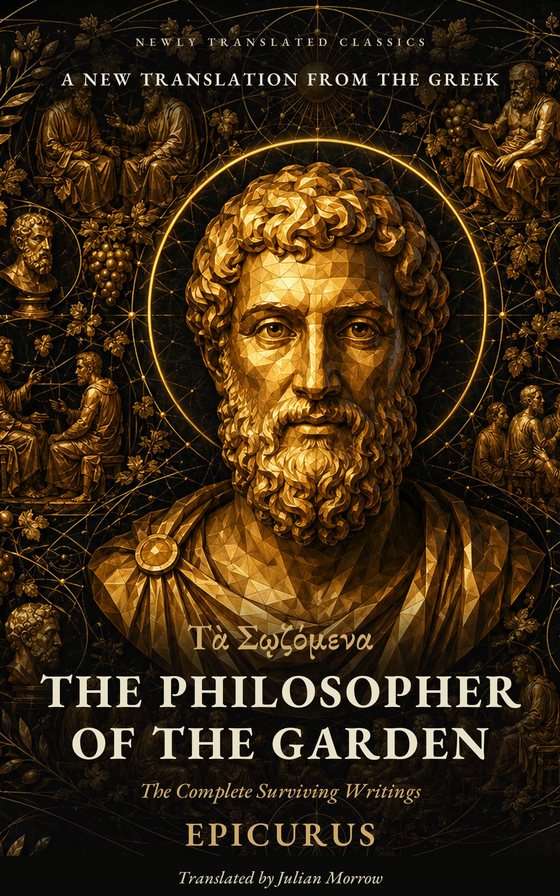
Epicurus: The Philosopher of the Garden
Translated by Owen Halloway