Lucilius Press › Reading guides
Cicero's On Friendship: what it says, in plain words
On Friendship is a short dialogue in which Laelius, just after the death of his close friend Scipio, talks about what friendship is. His answer: friendship is agreement on everything that matters, joined with goodwill and affection. It can only exist between good people. It is not built on usefulness, though it brings many uses. And after wisdom, it is the best thing the gods have given us.
The main points
Grief, handled well. Laelius has just lost Scipio. He misses him, but says he will not call it a disaster, because Scipio's life was full and their friendship was real.
A definition. Friendship is agreement on all things, divine and human, together with goodwill and affection.
Virtue first. Friendship grows out of good character and cannot survive without it.
Not a trade. We do not love friends for what they give us. The benefits follow from the friendship, not the other way around.
Limits. You should never do wrong for a friend, or ask a friend to do wrong for you.
Choosing. Test people slowly before you give your trust, and once you give it, give it fully.
The Lucilius Press edition
On Friendship is the second half of Cicero's On Old Age and Friendship a modern plain-English translation of both dialogues. Here is Laelius giving his definition.
How great the power of friendship is can best be understood from this: out of the boundless fellowship of the human race, which nature herself brought together, the thing has been drawn in and narrowed so far that all affection is joined either between two people or among a few. For friendship is nothing other than agreement on all things divine and human, together with goodwill and affection. And apart from wisdom I am inclined to think nothing better has been given to man by the immortal gods. Some people put riches first, some good health, some power, some public office, and many even put pleasure first. That last belongs to animals. The earlier ones are perishable and uncertain, resting not so much on our own plans as on the recklessness of fortune. Those who place the highest good in virtue do splendidly, but it is this very virtue that both gives birth to friendship and holds it together, and without virtue friendship cannot exist in any way at all.
From Cicero's On Old Age and Friendship, translated by Daniel Wexley, Lucilius Press. On Friendship, the definition. Free sample, reproduced from the book.
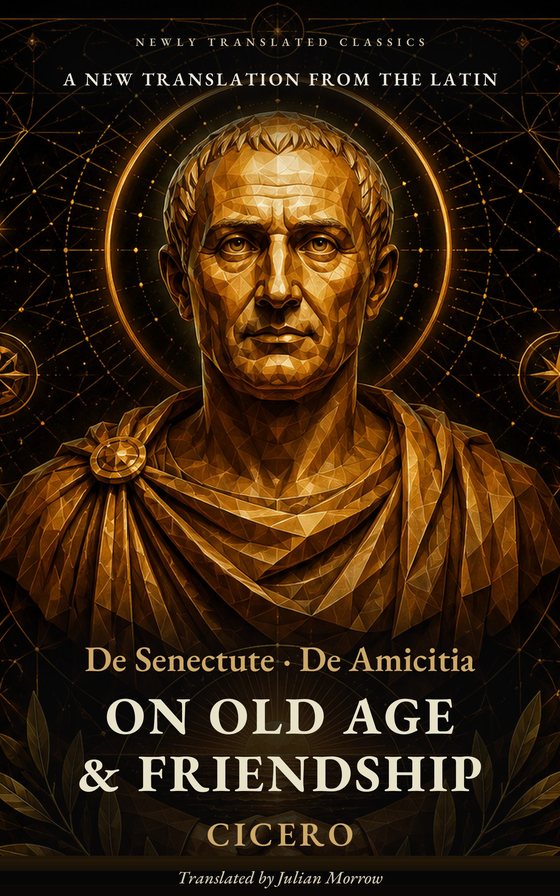
Cicero's On Old Age and Friendship
Translated by Daniel Wexley