Lucilius Press › Reading guides
Plato's Apology: what happens, in plain words
The Apology is Plato's account of the speech Socrates gave at his trial in Athens in 399 BC, where he was charged with impiety and corrupting the young. Apology here means defense, not saying sorry. Socrates explains his life of questioning, refuses to stop or beg for mercy, is found guilty, and is sentenced to death.
The three speeches
The defense. Socrates says he is not a teacher of clever tricks. He tells how the oracle at Delphi called him the wisest man, and how he tested that by questioning people who seemed wise, which made him enemies. He compares himself to a gadfly that keeps a lazy horse awake, and says he will obey the god rather than stop.
The penalty. Convicted, he is asked to propose a penalty. He half jokes that he deserves free meals at the city's expense, then proposes a fine, which his friends persuade him to raise to thirty minas.
The farewell. Sentenced to death, he speaks to both sides of the jury, and argues that there is good reason to hope death is a blessing.
Translations
Benjamin Jowett's (1871) is public domain. G. M. A. Grube's The Trial and Death of Socrates (Hackett, 1975) is a classroom standard that gathers the Euthyphro, Apology, Crito and the death scene from the Phaedo.
The Lucilius Press edition of Plato's Defense of Socrates is a modern plain-English translation of the four dialogues of the trial and death: Euthyphro, Apology, Crito and Phaedo, with an introduction and glossary. Here is the moment Socrates explains why he cannot keep quiet.
Perhaps, then, someone will say: But Socrates, can’t you go off and live in silence and keep quiet for us? This is the hardest thing of all to make some of you believe. For if I say that this is to disobey the god, and that for that reason I cannot keep quiet, you will not believe me, thinking I am being ironic. And if I say that this really is the greatest good for a human being, to talk every day about virtue and the other things you hear me discussing as I examine myself and others, and that the unexamined life is not worth living for a human being, you will believe me even less when I say that. But it is so, as I say, men of Athens, though it is not easy to convince you.
From Plato's Defense of Socrates, translated by Owen Halloway, Lucilius Press. Apology, the unexamined life. Free sample, reproduced from the book.
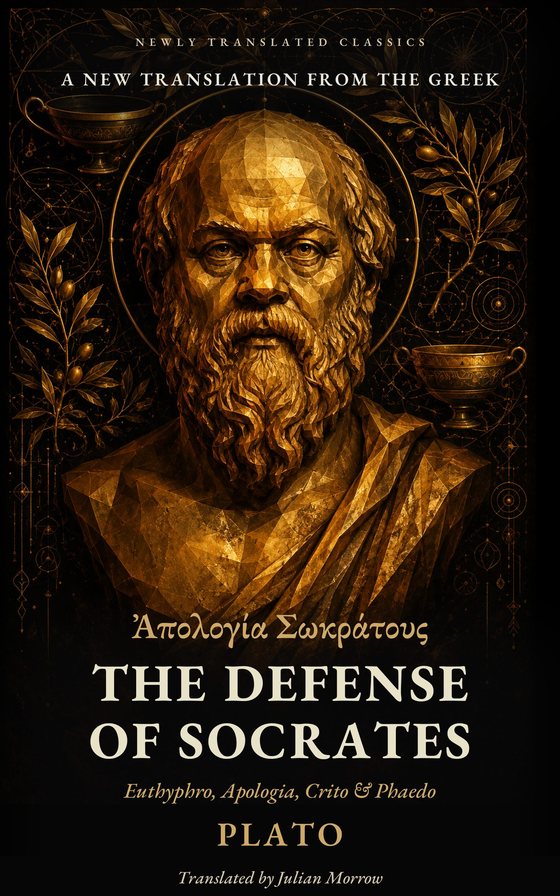
Plato's Defense of Socrates
Translated by Owen Halloway