Lucilius Press › Reading guides
Where to start with Plotinus
Start with On Beauty, which is Ennead 1.6. It is short, vivid and was probably his first treatise. Then read Ennead 5.1, on the three first principles, the One, Intellect and Soul. After that, read the treatises on the Good and the One in the Sixth Ennead. You do not need to read the Enneads in order.
Why the order helps
The Enneads are not a book Plotinus wrote from start to finish. They are fifty-four separate essays that his student Porphyry sorted into six groups of nine after his death, arranged to climb from human life up to the One. Each essay stands on its own. So you can begin wherever the door is easiest.
A short path
1.6, On Beauty. Why things are beautiful, and how beauty draws the soul upward.
5.1, On the Three Primary Hypostases. The map of his whole system.
4.8, On the Descent of the Soul into Bodies. It opens with one of the rare moments where he speaks of his own experience.
6.9, On the Good or the One. Where the climb ends.
Translations
Stephen MacKenna's translation, published in five volumes between 1917 and 1930, is beautiful and ornate. A. H. Armstrong's Loeb edition (seven volumes, 1966 to 1988) is precise, with the Greek facing. The Cambridge translation edited by Lloyd P. Gerson (2018), made by a team of translators, is a modern scholarly version.
The Lucilius Press edition of Plotinus' Enneads is a modern plain-English translation of all six Enneads in Porphyry's order, with an introduction and a glossary. Here is how On Beauty begins.
[1] Beauty is found mostly in sight, but it is also in hearing, in the arrangement of words and in music of every kind: for melodies and rhythms are beautiful too. And as we move upward from sense perception, there are beautiful ways of life and actions and states of character and branches of knowledge, and the beauty of the virtues. Whether there is something even prior to these, the argument itself will show. What, then, is it that makes bodies appear beautiful, and makes hearing assent to sounds as beautiful? And however many things depend on soul next in order, how is it that they are all beautiful? And are all things beautiful by one and the same thing, or is beauty in body one thing, and something else in something else? And whatever are these, or this one thing? For some things are not beautiful from themselves, the subjects in question, such as bodies, but by participation, while others are beautiful in themselves, as the nature of virtue is. For the same bodies appear beautiful at one time and not beautiful at another, as though being a body were one thing and being beautiful another. What, then, is this that is present in bodies? For this must be examined first. What is it, then, that moves the eyes of those who look, and turns them toward itself, and draws them, and makes them delight in the sight?
From Plotinus' Enneads, translated by Clare Whitlow, Lucilius Press. Ennead 1.6, On Beauty, opening. Free sample, reproduced from the book.
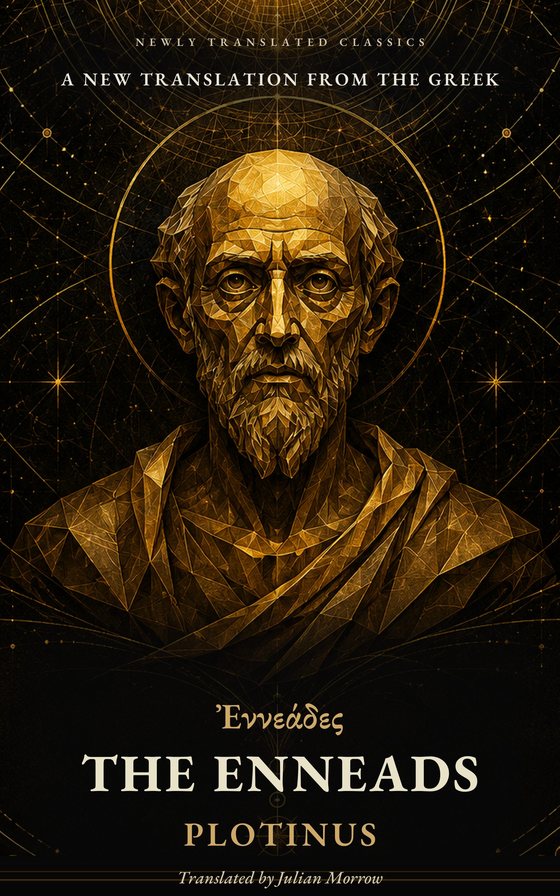
Plotinus' Enneads
Translated by Clare Whitlow