Lucilius Press › Reading guides
Cleanthes' Hymn to Zeus in modern English
The Hymn to Zeus is a short poem, about forty lines, by Cleanthes, the second head of the Stoic school. It praises Zeus as the reason or law that steers the whole universe, and asks him to free people from the folly that makes them chase fame, money and pleasure. It survives because the anthologist Stobaeus copied it out.
Why it matters
Almost everything the first Stoics wrote is lost. The Hymn is the one substantial piece that came through nearly whole, so it is the best place to hear an early Stoic in his own voice. It also shows that Stoicism, at the start, was a religious view of the world as well as a practical ethics.
Translations
The Hymn appears in scholarly editions and in source collections on Stoicism, usually in a literal translation.
The Lucilius Press edition
It is printed in full in The Early Stoics: Zeno, Cleanthes and Chrysippus in modern plain English, together with the four-line prayer of Cleanthes that Epictetus preserved. Here is how it begins.
Most glorious of the deathless gods, you of many names, forever all-powerful, Zeus, first source of nature, steering all things by law, I greet you. It is right that every mortal should speak to you. For we are born of you, and of all that lives and moves as mortal on the earth, we alone bear your likeness. So I will sing your praise, and hymn your power without end.
From The Early Stoics: Zeno, Cleanthes and Chrysippus, translated by Owen Halloway, Lucilius Press. Hymn to Zeus, opening lines. Free sample, reproduced from the book.
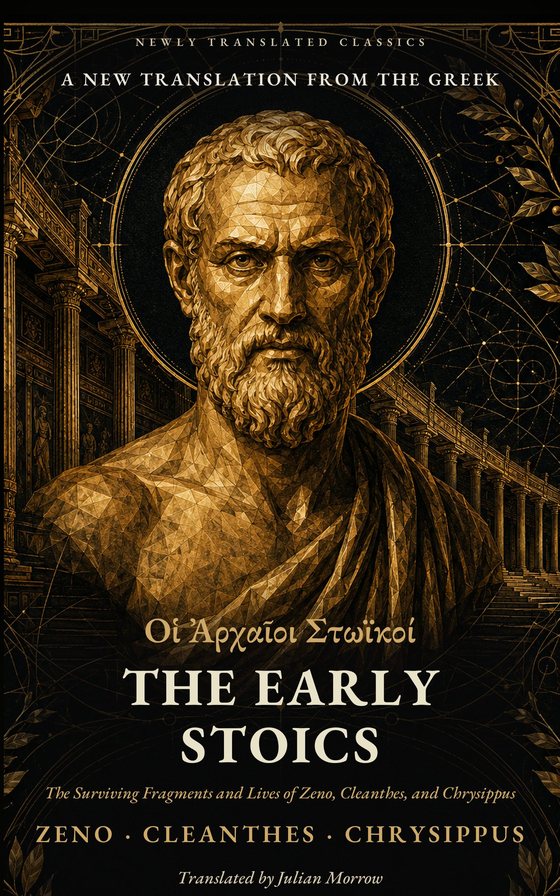
The Early Stoics: Zeno, Cleanthes and Chrysippus
Translated by Owen Halloway